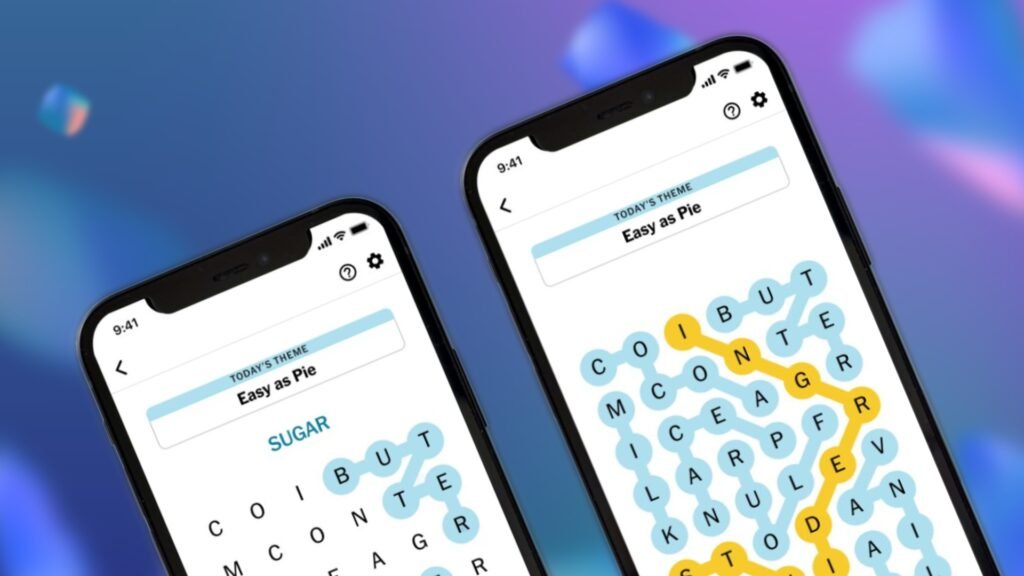

The Strands answers for Saturday, August 29, 2026, are HISS, GURGLE, BUBBLE, CRACKLE, SIZZLE and SPLATTER. Today’s spangram is SOUNDS TASTY, entered in the grid as SOUNDSTASTY. The official theme clue for puzzle #909 is “Now we’re cooking!”
All six theme words describe noises associated with food, liquid or heat in a busy kitchen. If you would rather solve the puzzle with a gentle nudge, stop before the answer section below—the hints become progressively more revealing.
Today’s NYT Strands puzzle at a glance
- Date: Saturday, August 29, 2026
- Puzzle number: #909
- Official theme: Now we’re cooking!
- Number of answers: Seven, including the spangram
- Spangram: SOUNDS TASTY
- Theme words: HISS, GURGLE, BUBBLE, CRACKLE, SIZZLE, SPLATTER
The completed solution has been independently reported by both Forbes and Yahoo Tech.
Spoiler-free hints for today’s puzzle
The official clue, “Now we’re cooking!”, points towards the kitchen—but the answers are not ingredients, dishes or cooking utensils.
Here are three increasingly direct hints:
- Concentrate on what you might hear while preparing food.
- Think about a pan heating up, water simmering and hot oil reacting to moisture.
- The board is looking for words such as the noises made by steam, boiling liquid and food frying in a pan.
Another useful clue is that several answers contain repeated letters. Look carefully for BB, ZZ and TT combinations. These distinctive pairs can help you identify a path even before you know the complete word.
First letters of the theme words
If you need a stronger push, the six regular theme answers begin with:
- B
- C
- G
- H
- S
- S
Their lengths are four, six, six, six, seven and eight letters, although not in that order.
Today’s Strands spangram
The spangram is:
SOUNDS TASTY
Inside the letter grid, spaces are removed, so it appears as:
SOUNDSTASTY
The 11-letter phrase captures the relationship between the other answers: each one represents something that can be heard while food is being cooked or liquid is moving in a kitchen.
Finding the spangram is particularly helpful because its long path divides the board into smaller areas. Once those 11 letters have been removed from consideration, the remaining clusters become easier to trace.
Strands answers for August 29, 2026
The full set of Strands answers is:
| Answer | Length | How it fits the theme |
|---|---|---|
| HISS | 4 | The sharp noise made when steam escapes or moisture reaches a hot surface |
| GURGLE | 6 | The uneven sound of liquid moving, simmering or passing through a container |
| BUBBLE | 6 | The sound and action produced as a liquid boils or simmers |
| CRACKLE | 7 | A series of small, sharp sounds associated with frying, roasting or an open fire |
| SIZZLE | 6 | The sustained sound made when food cooks on a hot surface |
| SPLATTER | 8 | The scattered drops—and accompanying noise—created when liquid or fat hits a hot pan |
| SOUNDS TASTY | 11 | The spangram connecting cooking with the sounds represented by the other words |
These words account for every square in the six-by-eight board. The six ordinary theme words contain 37 letters, while SOUNDSTASTY contains 11, producing the required total of 48.
Why the theme is “Now we’re cooking!”
Today’s puzzle is built around kitchen sound effects. Most of the answers are onomatopoeic or strongly sound-associated words: their pronunciation suggests, imitates or evokes the noise they describe.
The answers can be loosely divided into three groups:
- Liquid sounds: BUBBLE and GURGLE
- Heat and steam sounds: HISS and SIZZLE
- Sharper cooking noises: CRACKLE and SPLATTER
The clue is slightly deceptive because “Now we’re cooking!” can simply mean that progress is being made. Here, however, it should be interpreted literally. The puzzle is concerned with the sounds of actual cooking rather than the idiom.
SIZZLE may be the easiest entry to recognise because it has an especially direct connection with food hitting a hot pan. SPLATTER can be trickier: it describes both the movement of droplets and the messy, irregular sound they produce. GURGLE may also take longer to spot because it is associated with moving liquid more generally, not exclusively with cooking.
A practical way to solve the remaining grid
If you have uncovered one or two answers but cannot finish the board, start with the unusual letter combinations. A pair of Zs strongly suggests SIZZLE, while the double B can lead towards BUBBLE. Once those paths are confirmed, inspect the smaller pockets of unused letters rather than continuing to scan the full grid.
It also helps to separate the clue into actions:
- Water can bubble.
- Liquid can gurgle.
- Steam can hiss.
- Food can sizzle.
- A fire or crisp surface can crackle.
- Oil or sauce can splatter.
This turns a broad cooking theme into a manageable vocabulary list. The spangram should then become easier to anticipate, even if its exact path remains unclear.
If necessary, use the game’s built-in hint system. Finding three valid non-theme words of at least four letters unlocks a hint that highlights the letters belonging to one theme answer. The letters still need to be connected in the correct order.
How NYT Strands works
The New York Times Strands presents players with a six-column by eight-row grid. Unlike an ordinary word search, an answer may bend and change direction. Letters can be connected vertically, horizontally or diagonally, provided each selected tile touches the previous one.
Every tile belongs to either a regular theme word or the spangram, and no letter is shared between completed answers. Regular theme words are shown in blue, while the spangram is highlighted in yellow.
A spangram is the answer that defines or summarises the puzzle’s central idea. It must touch two opposite sides of the board, although it does not necessarily have to begin or end on an outer edge. A detailed TechRadar guide to Strands also explains the board, hints and scoring system.
The puzzle can be completed without using hints. Players who find every themed word and the spangram unaided receive a “Perfect” result.