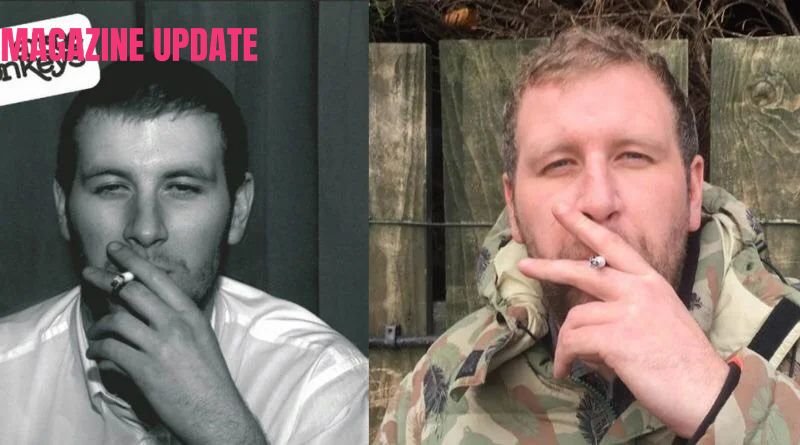

Chris McClure is instantly recognizable to millions of music fans, even if many have never known his name. His black-and-white portrait appears on the cover of Arctic Monkeys’ debut album, Whatever People Say I Am, That’s What I’m Not. With a cigarette in hand and the exhausted expression of someone nearing the end of a long night, he became the visual symbol of one of Britain’s defining indie-rock records.
Yet the photograph is only one part of his story. McClure has been a musician, writer, comedy performer, podcast creator and events organizer. His life has remained closely tied to Sheffield’s music and football culture, while his later work has explored recovery, mental health and the search for a creative identity beyond a famous image.
Who Is Chris McClure?
The Chris McClure most music fans are searching for is a Sheffield-born creative figure and a longtime friend of Arctic Monkeys. He is also the brother of Jon McClure, frontman of Reverend and the Makers.
The name can cause confusion because it belongs to several people working in entertainment and other industries. There was also a Scottish singer named Chris McClure who performed professionally as Christian, as well as actors and business figures with the same name. This profile concerns the Sheffield musician and performer pictured on the Arctic Monkeys album.
McClure grew up around the northern part of Sheffield during a period when a close network of teenage musicians, footballers and gig-goers was beginning to take shape. He has recalled meeting members of Arctic Monkeys while travelling home from concerts on the number 77 bus. They were about 16 and regularly attended many of the same local shows.
That friendship placed him inside the group’s early circle, before record contracts and international tours changed everything. When Arctic Monkeys first went on the road, McClure joined them as a guitar technician. He later admitted that he did not actually know how to tune a guitar properly. His presence was less about technical expertise and more about trust: he was one of their friends.
How the Arctic Monkeys Cover Was Created
McClure was studying sociology at Manchester Metropolitan University when original Arctic Monkeys bassist Andy Nicholson contacted him about an artwork idea. The band wanted photographs that looked like moments from an ordinary night out.
The concept was closely connected to the album itself. Alex Turner’s early songs observed queues outside nightclubs, difficult doormen, cheap drinks, romantic disappointment, taxi journeys and the strange behavior people display after midnight. A polished studio portrait would have felt out of place. The artwork needed somebody believable.
Nicholson had previously taken an informal photograph of McClure smoking at Sheffield’s Boardwalk venue. That picture helped establish the mood the band wanted. A professional shoot was then arranged in Liverpool with photographer Alexandra Wolkowicz.
McClure travelled there with friends and met the photography team during the afternoon. The instructions were unusually simple: go out, drink and return after midnight. When the group came back in the early hours, the photographs were taken in a space beneath the Korova bar. McClure sat on a stool while the photographer captured his tired, unfocused expression.
He was not initially told that his face would appear on the front of the record. The pictures were intended more generally for the album campaign. When he met the band several weeks later, however, they had chosen one for the cover.
McClure later said he received £750 for his participation. He did not negotiate royalties or a continuing share of the album’s earnings. At 19, he had little reason to imagine that a casual favor for friends would become an enduring piece of British music imagery.
Why the Photograph Worked So Well
The picture is memorable partly because it does not resemble a conventional publicity photograph. McClure is not smiling, performing or trying to look impressive. His face appears weary and slightly detached. The cigarette, plain background and harsh monochrome treatment give the image a documentary quality.
It also matches the world described in the songs. The album moves through Sheffield nightlife from the perspective of people who understand its pleasures and disappointments. The cover could represent someone waiting for a taxi, sitting alone after an argument or realizing that the night has lasted longer than expected.
Although the image looks spontaneous, it was shaped through art direction, photography and graphic design. Scott Jones handled the art direction, Matthew Cooper created the artwork, and Wolkowicz took the final photograph. McClure supplied the human presence that made the concept convincing.
The cigarette caused some controversy. Public-health critics argued that the cover could normalize smoking, while representatives connected with the release suggested that the photograph hardly presented smoking as glamorous. The disagreement demonstrated how quickly the picture had entered public consciousness.
Its impact also came from contrast. Arctic Monkeys were young, energetic and surrounded by enormous excitement, but the cover showed the aftermath rather than the party. It captured fatigue instead of celebration. That tension helped prevent the artwork from feeling like a temporary fashion statement.
Sudden Recognition and Its Complications
When the album was released, McClure experienced an unusual form of fame. His face was everywhere, but the public knew almost nothing about him. Reporters appeared at the pub where he worked and outside his mother’s home. Television producers and newspapers offered opportunities, including proposals built around following him on another night out.
He declined most of them because he did not want to exploit his friendship with the band. He accepted a small number of interviews, including appearances connected with BBC News and Soccer AM, but resisted turning himself into a professional celebrity based solely on the cover.
Recognition followed him through university. People asked him to recreate the smoking pose, while posters bearing his face appeared in student bedrooms. He completed his sociology degree, joking later that the disruption may have affected his final result.
The experience was entertaining at times, but it also created a difficult label. He became “the man from the Arctic Monkeys cover,” a description that could overshadow anything he attempted independently. In later reflections, he explained that repeatedly answering questions about somebody else’s success eventually became emotionally draining.
The Violet May and Sheffield’s Music Scene
McClure did pursue his own music career. He became the vocalist of The Violet May, a Sheffield rock band formed near the end of the 2000s. Its name came from Violet May, an independent record shop remembered as an important part of Sheffield’s musical history.
The group developed a reputation for energetic live performances. Its debut single, “Bright or Better,” was released on limited-edition vinyl, followed by further recordings including the TV EP. The band appeared on BBC 6 Music, played venues such as Koko in London and performed at festivals and European shows.
His connection with Arctic Monkeys inevitably attracted media attention, but The Violet May had its own identity. The group’s sound was more abrasive and confrontational than the gentle nostalgia that sometimes surrounded Sheffield’s indie boom.
McClure also appeared on the cover of Sheffield producer Toddla T’s album Skanky Skanky. Once again, his face became part of another artist’s visual language, although that image never approached the cultural reach of the Arctic Monkeys photograph.
The Violet May period was creatively active, but McClure has spoken honestly about his condition behind the scenes. He later said that he struggled with alcohol and felt uncertain about his direction. What looked from the outside like proximity to an exciting music movement did not necessarily provide personal stability.
Recovery and a New Creative Direction
For Chris McClure, seeking help for alcoholism in 2019 became a major turning point. He has credited people in Sheffield’s recovery community with helping him change his life and reconsider the identity he had built around music, nightlife and the famous cover.
After stopping drinking, he began studying occupational therapy at Sheffield Hallam University. The subject reflected his growing interest in mental health, addiction and the ways meaningful activity can support recovery. He also created interview and audio projects in which guests discussed the songs connected to important moments in their lives.
His experience informed documentary work about addiction in the music industry. Rather than treating recovery as a neat transformation story, he has described it as a process that allowed him to begin producing ideas he had previously delayed.
The most successful of those ideas was Steve Bracknall, a fictional Sunday-league football manager with an inflated opinion of his own tactical importance. The character is deeply rooted in Sheffield speech, pub culture and grassroots football. Bracknall complains about the modern game while struggling to manage the chaotic Royal Oak team.
Short social-media sketches developed into the comedy film Bracknall, in which McClure served as both writer and performer. The character later expanded into Game’s Gone: The Steve Bracknall Podcast, a BBC Radio 5 Live and BBC Sounds production. Its fictional football world combines current sporting discussion with continuing stories about players, pub regulars and lower-league rivalries.
Day Fever and Life Beyond the Album Sleeve
McClure is also one of the founders of Day Fever, a daytime clubbing event created with Jon McClure, actor Vicky McClure, filmmaker Jonny Owen and Sheffield events figure James O’Hara. Despite their shared surname, Vicky McClure is not related to Chris or Jon.
The format offers the atmosphere of a traditional night out during the afternoon, generally ending by early evening. Beginning in Sheffield, Day Fever expanded to venues across the United Kingdom and Ireland. Its success reflects demand among people who enjoy dancing and communal nightlife but no longer want a late finish.
There is a fitting circularity to McClure’s involvement. The man once pictured at the exhausted end of a night out now helps organize parties designed to let people enjoy themselves and still return home at a reasonable hour.
Conclusion
Chris McClure will always be connected with Whatever People Say I Am, That’s What I’m Not. The photograph remains one of the most recognizable British album covers of its era because it feels ordinary, specific and completely in tune with the music.
His wider life, however, complicates the familiar image. He moved through Sheffield’s music scene, struggled with the pressures surrounding his accidental fame, sought help for alcohol addiction and developed a new voice through comedy, broadcasting and live events. The album cover may have introduced his face to the world, but Steve Bracknall, Game’s Gone and Day Fever show a creative career increasingly built on his own ideas.
Frequently Asked Questions
Is Chris McClure a member of Arctic Monkeys?
No. He was a friend of the band and briefly helped on an early tour, but he was never an official member.
How old was he on the Arctic Monkeys album cover?
He has said that he was 19 when the album was released. His exact birth date is not consistently documented in reliable public profiles.
Who photographed the famous cover?
Photographer Alexandra Wolkowicz took the final portrait during a late-night shoot at the Korova bar in Liverpool.
Is he related to Jon or Vicky McClure?
Jon McClure of Reverend and the Makers is his brother. Actor Vicky McClure is a friend and Day Fever collaborator, not a relative.
What does he do now?
He works across comedy, podcasting and live events. He created the Steve Bracknall character, writes and performs Game’s Gone, and is involved in running Day Fever.